Showing posts with label Salem walks. Show all posts

Friday, May 13, 2016

Salem Religious Institutions

Salem has a number of distinctive religious buildings in its central area. This 4.2 mile long walk will take you by a number of them, as you meander through central Salem. All but two of the buildings along the route are Christian in nature, the exceptions being a Buddhist temple and a Bahai worship place. The walk also traipses through Willamette University, the downtown commercial district, and the State Capitol. While long, the route is level.


The walk begins at the corner of 17th Street and Chemeketa Street NE. On the corner is the Chemeketa Street Evangelical Church building, which has been converted to a private residence. The church was originally built in 1894. While it is not individually on the National Register of Historic Places, the entire Court-Chemeketa neighborhood in this area is on the National Register. The original church vacated the building in 1929, and later it was used by Mennonites and then the LDS Church ("Mormons") until conversion to a private residence some time before 1987. The original Evangelical Church that inhabited the building was probably an ethnic German congregation, espousing the Calvinist strain of German Protestantism (in contrast to Lutherans).
Go south on 17th Street. In one block, at the corner of Court and 17th, is the Court Street Christian Church. While this building was constructed in 1949, the church has been located on this site since 1913, started as an east Salem "extension" of the First Christian Church in downtown Salem (visited later on this tour). Looking at the church's website, it appears to be non-denominational, professing no connection to any larger or national church organization. The church's theology states that the Bible is the only authority for its faith, but does not explicitly state that the Bible is inerrant.

Continue on 17th Street to its intersection with State Street. Turn left and go two blocks on State Street. At the corner of 18th and State is the State Street Church of God, which has only this sparse Facebook page for its online presence. More information about the building's history is available here. The church building was constructed a few years after 1900 for a predecessor of the Evangelical Lutheran Church, a "mainline" Protestant denomination (see discussion for St. Mark Lutheran Church later on this walk). After a stint as a Baptist church the present congregation arrived in 1976. It appears to be a non-denominational church, which means it has no affiliation with a larger group of churches.

At 19th Street turn right and go one block to Ferry Street. On the corner of 19th and Ferry is the Korean Church of Salem. The church has a Facebook page without much content. The Korean Church of Salem is a Presbyterian congregation. The building was originally constructed in 1926 by a Congregationalist congregation which closed its doors and sold the building to its current occupants in 2005.

Turn right on Ferry Street and then turn left onto 18th. Go two blocks on 18th to Mill Street, then turn right and go three blocks on Mill to 15th Street - carefully cross busy 17th Street. At the corner of 15th and Mill is the Mia Chung Buddhist Temple, located in this attractive red building. The temple does not have a website - in fact, it appears to have no internet presence of any kind.


Continue on Mill Street to its terminus at 12th Street. Use the pedestrian crosswalk to carefully cross traffic, and then head right on 12th Street. After you pass the parking lot on your left turn left into the Willamette University campus. Turn right between the first two buildings, and then left at the first opportunity between buildings. Continue to the large green area known as the Quad. Go around the Quad to the right and stop at the second building on the right. This is Waller Hall, the oldest building on campus (dating from 1867). Among other campus offices it is the home of Cone Chapel, the school's religious facility.

If you visit during weekdays you can go into the chapel itself. In its current form it was consecrated in 1989. It features a stately pipe organ in the front and a dozen large stained glass windows. While Willamette University was founded in 1842 by Methodist missionaries the school has long been unaffiliated with any religious institutions.


After leaving Waller Hall continue north toward the State Capitol. At State Street turn left and head down the street. At the intersection of State and Cottage Streets, to the left,  is a Baha'i Faith Center. The Baha'i Faith was founded in 19th century Iran, and asserts a synthesis of past prophets of many world religions into a new monotheistic religion of world peace and unity. There are about 5 million adherents worldwide. The largest number used to be in Iran, but the Islamic regime under Ayatollah Khomeini and his successors has worked to ruthlessly extirpate the faith from that county since 1980.

Continue straight ahead on State Street for another block to Church Street. The street may be named for this structure, the First Methodist Church of Salem on the corner of State and Church Streets, originally built in 1878. Its spire is taller than every other structure in the city other than the State Capitol.  The original spire had to be replaced in 1984, but the new spire is an identical match. The United Methodist Church has 7.2 million adherents in the U.S., making it the third largest national church (behind Roman Catholicism and the Southern Baptists). This "mainline" Protestant church has its origins in the preachings and teachings of legendary 18th century evangelist John Wesley.

Turn right onto Church Street and proceed two blocks to Chemeketa Street, where you will turn left. After three blocks on Chemeketa turn right onto Commercial Street. In the first block, on the left, is the Union Gospel Mission. Founded in 1953, it serves the homeless while trying to convert them to Christianity, or at least have them become receptive to Christian teachings. There are many such Christian homeless shelters and providers of services to the homeless throughout the U.S. - the largest of these is the Salvation Army.

After two blocks on Commercial Street turn right onto Marion Street. After one block, on the corner of Marion and Liberty Streets, is the Salem First Baptist Church. A short history of the church is found here - while the church has been on this site since 1868, the current building was constructed in 1951. First Baptist does not make any mention of a national affiliation on its website, but it appears to be part of the Conservative Baptist Association, a loose group of churches that split from the more "liberal" Northern Baptist Convention in the middle of the last century. The history of formations, splits, and unions of groups of Baptist churches in this nation is much too complicated for any explanation here. National Baptist church organizations are often very loosely organized, and the particular theology of individual Baptist churches in the same grouping may vary widely. The Baptist faith is differentiated from other versions of Christianity by belief that the act of baptism - committing oneself to the Christian faith by complete immersion in water, is only possible for consenting adults (as opposed to the practice of other Christians, most notably Roman Catholics, of baptizing infants).

Turn left onto Liberty Street and after one block turn right at Union Street. After two blocks on Union turn left onto Church Street and walk north. At 675 Church St. NE is this beautiful old federal-style home. It is the Endicott House, built in 1910. and now converted into offices.


Continue north on Church Street. You will soon reach this bridge in the road that crosses Mill Creek. This waterway, augmented by a diversion from the Santiam River, meanders around the central Salem area, occasionally flooding homes and other buildings along its banks.

Continue on Church Street to "D" Street, then turn right. After one block, at the corner of Cottage and "D",  is the Evergreen Presbyterian Church. This congregation is a member of the Presbyterian Church in America (PCA). The PCA split from the mainstream Presbyterian Church U.S.A. in the 1970's as a conservative reaction to the increasing liberalism of the national Presbyterian church, disagreeing with among other theological innovations the ordination of women. However the building, constructed in 1928 in a neo-Gothic style, was originally the Bethel Baptist Church, and has only been occupied by the current Presybterian congregation since 2008.
Turn right onto Cottage Street and go back south. After one long block you will reach Union Street - proceed another block to Marion Street. Between Union and Marion on your left is the Old Garfield School Building. Constructed in 1909, it served as an elementary school until 1973. It has now been repurposed as office space, and is on the National Register of Historic Places.

Opposite the Old Garfield School Building, on your right, is the Salem First Christian Church. The church is part of the Disciples of Christ national church. The church requires a belief in Jesus Christ as the Son of God, but encourages its individual churches and members to find their own way in Christianity and not follow any additional established doctrine. The church's national membership has declined steeply from 2 million in the 1950's to 650,000 today. Three Presidents, James Garfield, Lyndon Johnson, and Ronald Reagan, were Disciples of Christ at some point in their lives. This brick building that is home to the congregation was built in 1951, although the congregation was established in Salem way back in 1867.

Turn left onto Marion Street. On your right is the First Congregational United Church of Christ. The church's website describes itself as a "long established, theologically liberal, open and affirming, just peace congregation." The United Church of Christ is the most theologically and politically progressive of mainline Protestant churches in the United States, which is interesting, since Congregationalism has its roots in the austere Puritan churches of 17th century Massachusetts. The history of First Congregational in Salem goes back to 1852 - the current building was dedicated in 1941.

The next church is adjacent to the First Congregational Church, at the corner of Marion and Winter Streets, on your right - St. Mark Lutheran Church. This "American" Lutheran Church (with services in English instead of German) was formed in 1927, and originally used the "Old Presbyterian Church" building a couple of blocks away on Church Street. In 1958 the church dedicated this building and the old church, originally built in 1894, was demolished. St. Mark is a member of the Evangelical Lutheran Church of America (ELCA), which is a mainline Protestant denomination. This branch of Lutheranism is in "full communion" with the national Episcopal, Methodist, Reformed, Presbyterian, United Church of Christ, and Moravian Churches, which means that these churches welcome members of sister churches in services. including at communion, recognize ordained ministers of sister churches, and coordinate and worship together in other ways that are described well in this ELCA webpage.

Notably, "full communion" among American churches does not include the Roman Catholic Church in America. Which brings us to the next church building. At Winter Street turn right and go two blocks to Chemeketa -  on the right is St. Joseph Catholic Church. While a Roman Catholic church building has been present on this block since 1864 the current building was completed in 1957, apparently with some local controversy over the height of the bell tower. Behind the church building is St. Joseph's Elementary School.


On the opposite corner of Winter and Chemeketa, on the right, is First Presbyterian Church, built in 1928. Amazingly, this substantial church building was moved to this location. The church was originally at the northeast corner of Winter and Chemeketa Streets. In 1958 it was moved diagonally across the Chemeketa/Winter intersection to its current location, to make room for the State's Bureau of Labor and Industries building. First Presbyterian is a member of the Presbyterian Church USA, a mainline Protestant denomination. Presbyterianism has its roots in the Scottish Reformation of the 16th century, whose leader was John Knox, and is based upon rejection of the rule by bishops and their replacement as leaders by governing boards of lay elders, or presbyters.

Continue one block further on Winter and then turn left onto Court Street. Stay on the left side of the street as you pass the State Capitol on your right, and continue several blocks, past the 12th Street railroad tracks, to the corner of 14th and Court. On your right is St. John Lutheran church. While the building looks older, it was constructed in 1953. St. John is a member of the Missouri Synod branch of Lutheranism, which dates back to a conservative reaction to increasingly "reformed" Lutheranism in early 19th century Germany, and was founded in the United States in 1847. The Missouri Synod Lutherans remain more conservative than the larger, "mainstream"  Evangelical Lutheran Church of America, and are not in full communion with other mainline Protestant faiths.

Continue on Court Street to 15th Street, then turn left. After one short block turn right onto Chemeketa Street, where in two blocks you will be back at your starting point.

Monday, February 2, 2015

Salem - Deepwood Estate and Bush's Pasture Park

Oregon's State Capitol city, often derided as a dull place, is actually, once you scratch the surface, a city with lots of interesting sights and activities. This walk will take you south of the State Capitol, through the Willamette University Campus, to the Historic Deepwood Estate and Bush's Pasture Park before returning through Salem's public hospital and the University campus to the Capitol building. There's lots of interesting architecture to look at along the route. The walk is 2.6 miles long, and has one significant hill n the neighborhood south of Bush's Pasture Park.


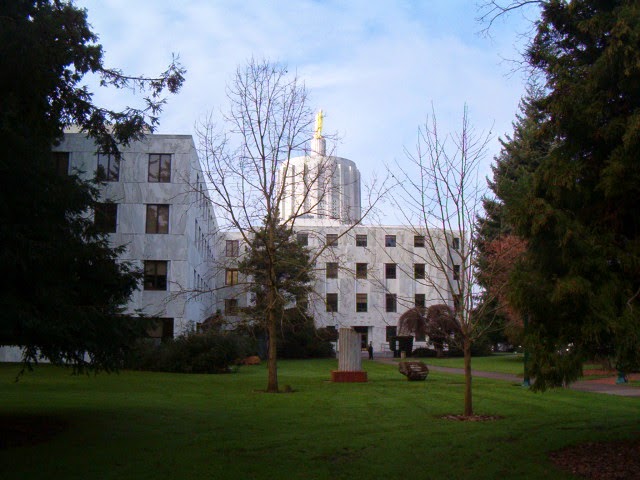
This walk starts at the beautiful Oregon State Capitol, constructed in 1938 after the previous capitol building burned to the ground in 1935. The part of the building in the foreground in this photo is actually one of two major 1977 additions, one on either side of the original building. This side is occupied by State Senators and their staffs. The entire building is scheduled to be vacated for over a year after the 2015 legislative session to accommodate a major seismic upgrade.

Start at the State Street side of the Capitol and turn left. Cross at the crosswalk near the intersection of State and Waverly to the Willamette University campus on the south side of State Street. The first building you will see is the newest major building on campus, Ford Hall. Named for major contributor Hallie Ford (she also has the university art museum named for her), the building was completed in 2009 and houses several university liberal arts programs.

Walk to the right of the Ford Center, and then continue to the right of the next building, Smullin Hall, which houses Willamette's information technology functions. Once past Smullin Hall turn left, and to your right will be the Pelton Theater, guarded by two lions out front. The theater was completed in 1923.


Once past the Pelton Theater and the parking lot next to it, turn right. Continue to a bridge over Mill Race Stream. Immediately beyond is the Martha Springer Botanical Garden, opened in 1998 as a tribute to a long-time biology professor. The small one-acre garden includes 12 micro-gardens. Mill Race is a diversion from Mill Creek to Mission Creek that provided water power to the Thomas Kay Woolen Mill located upstream from this location as well as several other long-ago departed industrial enterprises.

After crossing Mill Race and looking at the botanical garden veer right and and then go straight ahead. On your right is the Mark Hatfield Library and on the left is the Sparks Athletic Center. Once you get to the parking area turn left along the sidewalk and pass by the front of the Sparks Center. Continue to the right along the side of a soccer field until you get to Bellevue Street.

Turn left onto Bellevue, and after one block use the crosswalk to turn right on 12th Street. As you proceed south you will see, in the distance to the left, Salem's Amtrak Station, a beautiful Beaux-Arts style building constructed in 1918. Continue along this busy, undistinguished section of 12th Street, to Mission Street. You will pass by the popular Ram pub as well as a bridge over "Mission Creek" (about which more will be said later on the walk).

After you cross Mission Street the scenery takes a turn for the better. To the right is the Historic Deepwood Estate. This four-acre site is owned by the City of Salem as a public park, but the 1894 Queen Anne-style mansion is managed by Friends of Deepwood Estate, who provide organized tours of the home. The estate was given its name by Alice Powell, its final owner before the City acquired the property in 1971.


The estate is much more than just the grand mansion - the four acres of grounds also include beautiful gardens and a greenhouse that are open for free to the public. It is worth your time to wander through the gardens to admire the flora.


After you walk around and enjoy the Deepwood Estate grounds, go back onto 12th Street. After passing Lee Street, turn right onto Waller Street. After a block of ordinary apartment buildings you will come to this bridge, which crosses Pringle Creek. Use the bridge to cross the creek, then turn left onto the pathway.

You are now entering Bush's Pasture Park, a 90-acre greenspace. A stroll through the western half of the park is included on this walk - our route will go through the eastern part of the park. Continue past the trees into a large open grassy area, with trails that see a lot of use by joggers. Continue to the edge of the park at Leffelle Street, then turn right onto Leffelle (or stay on the pathway at the edge of the park which parallels Leffelle).
The neighborhood south of Bush's Pasture Park contains a number of old, attractive houses, such as this bungalow-style home, built in 1920, at the corner of Leffelle and Davidson.


Continue on Leffelle to its end at Summer Street, then turn left. Go one block and then turn right onto Cross Street. Go up a short hill on the next block, and at the top of the hill, after crossing Winter Street, is this stately Georgian-style home, built in 1934 for Custer Ross, a prominent local attorney. The American elm tree in front of the house is a lot older, dating from 1890, and is a Salem Heritage Tree. 

At Cottage Street turn right, and after one block you will reenter Bush's Pasture Park. Continue on the park trail that veers slightly to the left, on level terrain. When this path T's into another walking path turn right, and start going down a hill.


As you start on this path down the hill, to the right you will see this statue. It is entitled "Guidance of Youth," and depicts a pioneer family resolutely striding forward, presumably toward Oregon on the Oregon Trail. It was commissioned and placed on this spot in 1959 to commemorate the centennial of Oregon's admission as a state to the Union. Not mentioned on the plaque to the back of the statue is its interesting back story. It was commissioned and paid for with a $34,000 bequest from Carroll Moores, an evidently very thrifty janitor for the Oregon Supreme Court building. An earlier idea to use the money to purchase a painting of a nude by Auguste Renoir was the subject of significant local controversy, and was rejected.


After viewing the statue return to the trail and continue down the hill. You will be leaving the forested portion of the park and heading back into the grassy field portion of Bush's Pasture Park, but the last of the trees is this beautiful deciduous specimen.

At the bottom of the hill continue on the trail to the left. You will skirt the perimeter of the Willamette University baseball field and the University's McCulloch football stadium. The Willamette Bearcats participate in the NCAA at the Division III level. While the Bearcats don't have the consistent level of football excellence found at rival Northwest Conference foe Linfield College in McMinnville, the school plays at a generally high level, last winning the conference championship in 2008.

As you pass by the football stadium the trail branches. At the first branch go to the left, and almost immediately the trail will branch again - at this point, go to the right. You will be heading for the intersection of Mission Street and Winter Street. Cross Mission at the signal light, and proceed up Winter Street. You will soon be in going through the massive Salem Hospital campus. Salem Hospital is the only major public hospital in the city. Its recent plans to expand westward to Church Street has engendered some local controversy.

At the north end of the Salem Hospital campus, between the hospital and Bellevue Street, you will pass over this waterway (earlier you passed over it while on 12th Street near the Ram Restaurant). It is shown on some maps as Mission Creek, but it is actually the Shelton Ditch, a diversion canal from Mill Creek to Pringle Creek originally constructed in the mid-19th century. It is part of the complex set of creeks and ditches serving Salem with water that is for the most part diverted from the Santiam River to the south.

After Sheldon Ditch, you will cross busy Bellevue Street and continue north on Winter Street. You are now back at the edge of the Willamette University campus. On the left side of Winter, across from the main campus, is the Willamette University College of Law. The college is one of three law schools in Oregon, and has a healthy rivalry with the University of Oregon and Lewis and Clark law schools. The law school's main building, the Truman Wesley Collins Legal Center, was built in 1967,


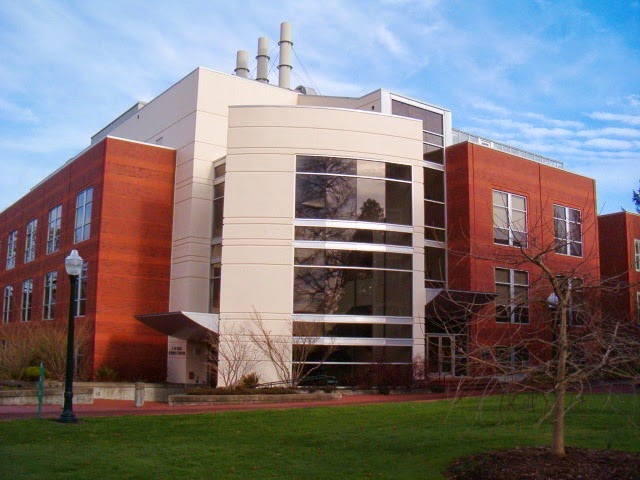
To the right on Winter Street, before its intersection with State Street, is the Olin Science Center, constructed in 1995 and housing Willamette's biology and chemistry departments. 


Continue on Winter Street until it tees into State Street. On the block to the left are a series of interesting buildings. On the corner is the Civic Justice Center, home of the Oregon Law Commission, which inhabits Salem's 1912 Carnegie Library, with a classic beaux arts style used in many such libraries around the world. It served as Salem's public library until 1971, then was used by the YWCA until 2008, when it was refurbished by the law school and dedicated by none other than Supreme Court Justice Ruth Bader Ginsburg. Next on the block is the modern-style YWCA building, which has now been vacated by the YWCA, constructed in 1954. The architect was Pietro Belluschi. Next down is the art-deco style Pacific Telephone and Telegraph building, now occupied by CenturyLink, built in 1930. Finally, on the corner of State and Cottage, is the Hallie Ford Museum of Art, opened by Willamette University in 1998, with an excellent collection.

After taking a look at these buildings, turn right on State Street and return to the State Capitol. You will pass by the other 1977 addition to the original capitol, which primarily is occupied by members of the State House of Representatives and their staffs.

Thursday, August 14, 2014

Salem - South to Mahonia Hall


South Salem is the nicer part of town - the topography goes up a bit and residents in the early 20th century tended to put nicer houses up on the heights. This walk starts near downtown and goes to Mahonia Hall, the official residence of Oregon's Governors, and back. The walk is 3.5 miles, with moderate ups and downs.


The walk starts at the Pringle Park parking structure on SE High Street and Mill Street. Parking is $5 per day from 8 AM to 6 PM on weekdays and free at other times.


From the parking structure proceed south on High Street. You will cross Pringle Creek, one the many Salem creeks that used to provide water power for mills in the 19th century. On the other side of the creek is the edge of Salem's largest historic district, the Gaiety Hill-Bush's Pasture Park area. Almost immediately on the right, at the corner of High and Oak Streets, is the Jarman House, a beautiful 1929 Spanish Revival home. There are several other large historic homes in this two-block stretch of High Street.

At Leslie Street turn right and go one block to Liberty Street. At Liberty turn left, but before doing so look at the northwest corner of this intersection, Salem's civic center, including the city hall and library, was constructed here in 1972. The architectural style of these concrete buildings is appropriately known as "brutalist," representing in many minds the worst of "modern" post-World War II architecture.


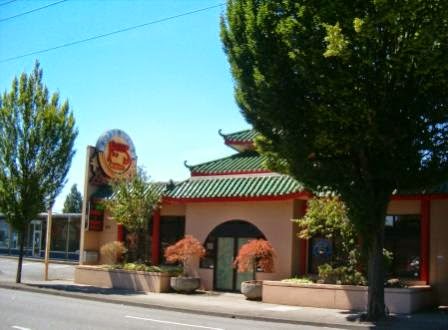
After turning left on Liberty Street proceed one block to Mission Street, and then cross Liberty at the signalized intersection, heading right on Mission. Go one block on Mission to Commercial Street. At Commercial turn left. On the right side of the street is Kwan's Chinese Restaurant, in this location since 1982, and generally thought to be the best Chinese restaurant in Salem.


After one block on Commercial turn left onto Kearney Street, but before doing so note Gerry Frank's Konditorei on the southwest corner of this intersection. This bakery, located here since 1982, is acknowledged as the best dessert spot in Salem. Gerry Frank is a scion of the Meier and Frank department store family, for many years chief of staff to Governor and then Senator Mark Hatfield, and is an Oregon institution. He also has a Sunday Oregonian column with restaurant and lodging recommendations around the state.

After a block's walk on Kearney turn left onto Saginaw Street. After two blocks you will cross busy Owens Street, which is a main route toward the Willamette River south of Salem. Continue south on Saginaw Street. After four blocks, at the corner of Saginaw and Leffelle, is the office of the Salem Family Literacy Center. This program, administered by the Salem-Keizer School District, aims to help young parents attain a GED and other education needed in today's workplace, while also providing pre-school and other family services.

After one more block on Saginaw turn right onto Lincoln Street and head up the hill. You are now in the Fairmount Historic District, which encompasses several blocks west of Commercial Street. Lincoln Street is lined with fine old homes. One of the most notable is the Otto Johnson House (325 Lincoln Street), a colonial mansion on the right side of the street. Built in 1930, its original owner was a local JC Penney executive. Today it serves as the Willamette University President's quarters.


After three blocks Lincoln Street ends, so turn left onto John Street. However, at the corner of Lincoln and John is Mahonia Hall, official residence of Oregon's Governor. The Tudor-style mansion was originally built in 1924 for Thomas Livesley, a wealthy hops farmer. It was purchased in 1988 with private donations as the Governor's residence. After a period where the mansion was sparingly used by former Governor Kitzhaber, it is apparently once again the actual residence of Governor Kate Brown. The mansion is securely gated, so you will have to peer at it through iron bars.

After one block on John Street turn right onto Washington Street. The road dead-ends, but a path continues down hill one block to Riovista Way. While trees get in the way, there is a view of the Willamette Valley below, with its rolling hills and fertile crop land.


On Riovista Way turn left and go one block. There you will see this stairway heading back up the hill to the left. Take it, and you will end up on the upper end of Superior Street. Continue straight ahead back down the hill.


Not all of the homes in the Fairmount Historic District are mansions, but even the smaller ones are a pleasure to look at. A fine example is this colonial style house at the northeast corner of Superior and John Streets, built about 1925. The comfortable lawn chairs speak to lazy, pleasant summer days and evenings.


Continue down Superior Street to Saginaw Street, then turn right and go two blocks to the no-longer- correctly-named Rural Avenue. At Rural turn left and go one block to Commercial, crossing this busy street at the signal light. After crossing continue two blocks on Rural to East Nob Hill Road. Turn left here and go two blocks north. There are two streets in this pre-World War II subdivision, East Nob Hill and West Nob Hill. The subdivision has typical smaller homes in popular architectural styles of that era.

At Superior Street turn right and go one block east to High Street, where you will turn left. After a very short distance on High Street, turn right onto Howard Street and go one block to Church Street.  On the corner of Church and Howard is South Salem High School. This school was opened in 1954 as Salem's second public high school. Since the original Salem High School (now North Salem High) are nicknamed the Vikings, South Salem became the Saxons. The city now has six public high schools.

Turn left onto Church Street and walk north for three blocks. Most of the homes in this neighborhood are also pre-World War II, with a couple of jarring exceptions built later in more modern styles. After three blocks Church Street ends at Bush's Pasture Park. Continue straight ahead into the park and proceed north on the walking trail. The 90-acre park is named for Asahel Bush, founder of Salem's Oregon Statesman newspaper and original owner of a house on the current park grounds.

The park trail walks through tree areas and grassy pastures. To the right, down the hill, you will get a view of McCullough Stadium, home to the Willamette University Bearcats football team. Next to the football stadium is Spec Keene Stadium, Willamette's baseball field.


Continuing north on the park path will bring you to the Bush Barn Art Center, located in a historic barn next to Asahel Bush's former home. The Art Center is operated by the Salem Art Association and has five arts and crafts galleries. Admission is free. Next to the barn is this playground noted for its crooked house play structure.


Beyond the playground is the Asahel Bush house, constructed in 1877. The house is also operated by the Salem Art Association and features period furnishings. It is open for guided tours.


Turn left in front of the Bush house and head west, between the house and the Bush Barn. Behind these structures is a beautiful municipal rose garden, with this gazebo as its centerpiece. It is maintained by Friends of Bush Gardens, a nonprofit organization.


Continuing west, before you reach High Street take the trail to the right that goes around and below the rose garden. The trail will take you to the intersection of Mission Street and Church Street where you will cross Mission Street and head north. Church Street contains several historic homes on its left side. Cross Pringle Creek and then take a left onto a creekside trail on the north side of the creek. Follow the trail through a tunnel under High Street, and you will return to your starting point at the Pringle Park parking structure.

About Me

Blogs about biking and walking in the Pacific Northwest